From Jerusalem to Ethiopia, God Keeps His Prophetic Word | February 15, 2026
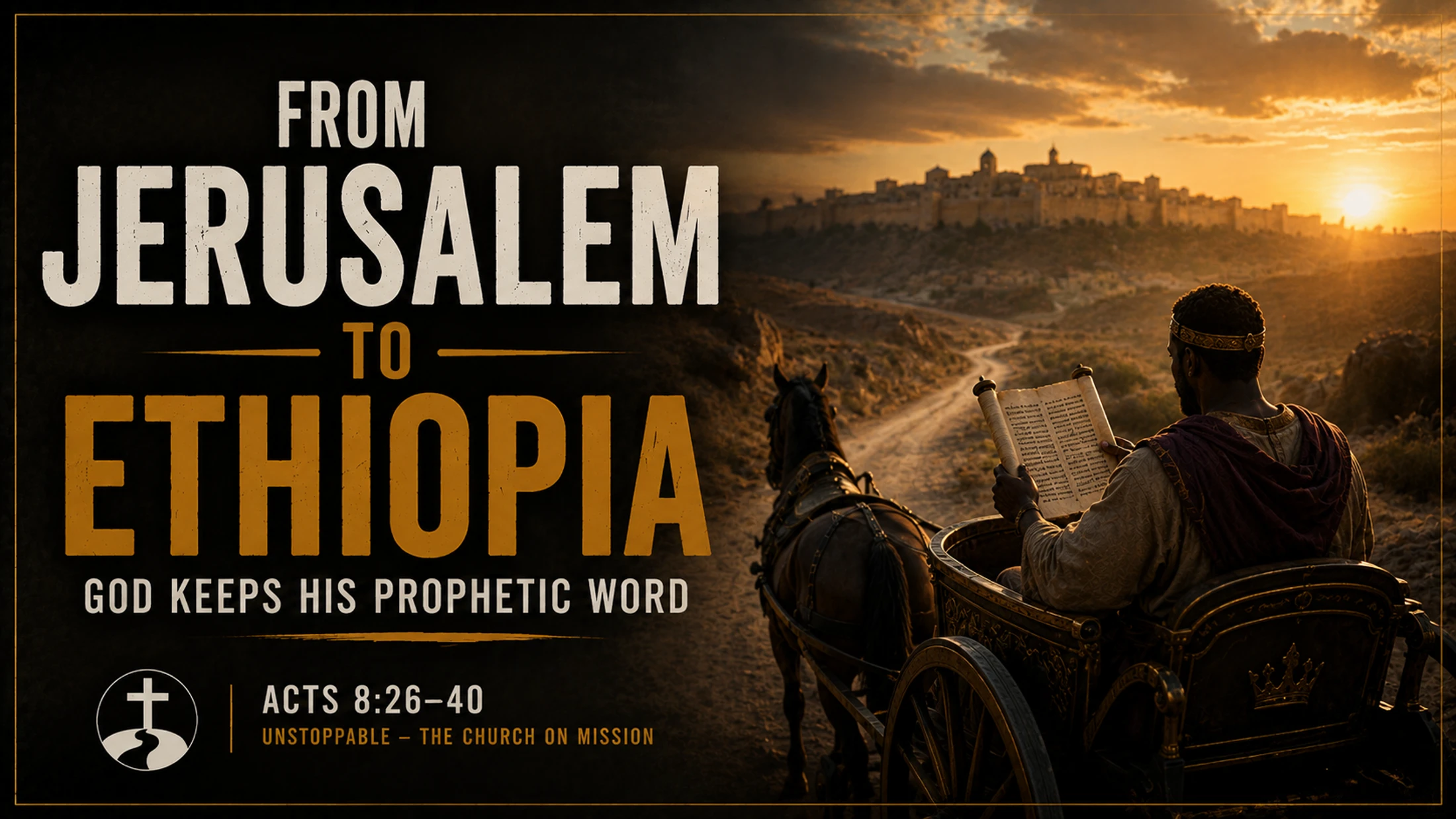
Sermon number twenty-three took us on the road with Philip as an angel of the Lord sends him south toward Gaza, and Pastor Justin walked us through Acts 8:26-40 to introduce the Ethiopian eunuch, a high ranking treasurer serving Candace, the queen mother who effectively ruled the ancient kingdom of Kush. This official had traveled hundreds of miles to worship in Jerusalem, likely as a Gentile God fearer whose status as a eunuch would have limited his full participation in temple life under Deuteronomy 23:1, and he was returning home reading aloud from Isaiah 53.
The Setup: A Chariot on the Desert Road
Before diving into the encounter itself, Pastor Justin took time to explain the Old Testament office of prophet, a recognized role alongside priest and king that ended with Malachi roughly four hundred years before Christ. He distinguished that Old Testament office from the New Testament gift of prophecy, where individuals like Agabus received specific personal revelation but no one after Christ ever held a corporate prophetic office over God's people, testing every claimed prophecy against Scripture as commanded in Isaiah 8:19-20 and 1 John 4:1.
Philip, prompted by the Spirit, joins the official's chariot and asks if he understands what he is reading. The man confesses he cannot without a guide, and Philip uses that very passage, Isaiah 53:7-8's picture of a silent sheep led to slaughter, to proclaim the good news about Jesus. Pastor Justin anchored the whole message on a simple big idea, that God's prophets are always correct, and that Isaiah's suffering servant prophecy, written some seven to eight hundred years earlier, found its precise fulfillment in Christ.
The official's response was immediate, asking what could prevent him from being baptized right there along the road, since he would have had no one to baptize him once he returned home to Ethiopia. Pastor Justin also addressed the well known textual question of Acts 8:37, missing from many modern translations because it does not appear in the earliest manuscripts, explaining that its absence changes no core doctrine since believer's baptism and public confession of Christ are clearly taught elsewhere in Romans 10:9-10 and Acts 2:38.
Pastor Justin noted that early church historian Eusebius connected this man's conversion to Psalm 68:31's promise that Ethiopia would stretch out her hands to God, and that Ethiopian Christian tradition holds this very official carried the gospel back to Axum, making him the first to preach Christ in that region. What looked like a chance encounter on a desert road was in fact the fulfillment of Jesus' own words in Acts 1:8 that the gospel would spread to Judea, Samaria, and the ends of the earth.
The sermon closed with two practical applications, that believers must stay sensitive to the leading of the Holy Spirit the way Philip obeyed the angel's strange instruction, and that our discernment must be anchored in God's already fulfilled written word rather than a constant search for new spiritual experiences.
This Week's Application
So this week, take God at His word the way this Ethiopian official did, even the parts of Scripture that feel confusing at first read. We would love for you to join us this Sunday as we continue walking through Acts together.